Inkjet Clear Polyester Film for Printing Film Positives
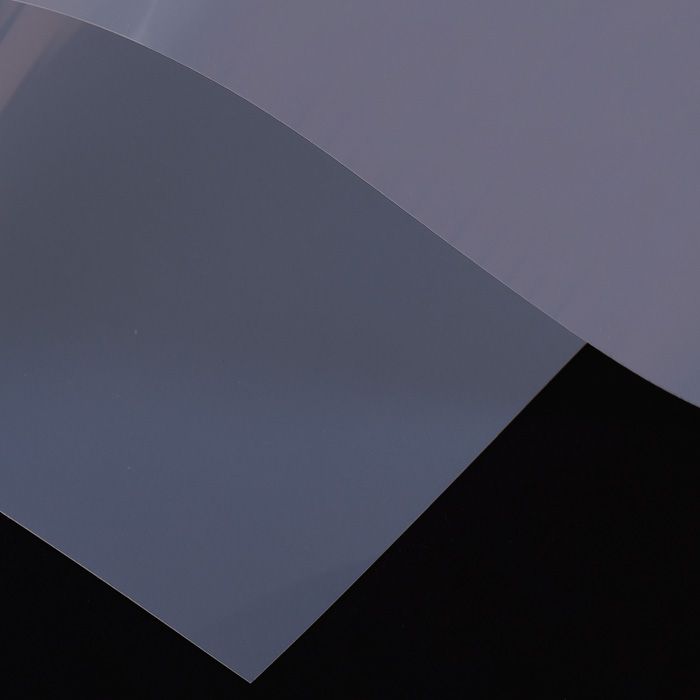
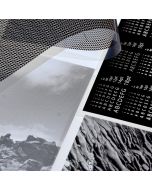
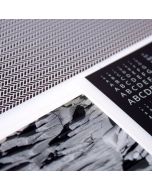
Rittagraf Inkjet Clear Polyester is a transparent PET film specifically treated for producing digital film positives with inkjet printers.
Unlike standard acetate or untreated polyester, one side has a special ink-receptive coating. This allows sharp images and high-density blacks to be printed while maintaining good light transmission through the clear areas.
It can be used to produce positives for screen printing, photogravure, photopolymer plates, offset, flexography and other photomechanical processes, as well as selected alternative photographic processes.
A Film Specifically Designed for Inkjet Printing
Producing a film positive involves more than simply printing onto a transparent plastic sheet.
Inkjet inks require a surface capable of controlling ink deposition and adhesion. On untreated plastic, ink can suffer from poor adhesion, spreading, slow drying or insufficient density.
The coating on Inkjet Clear is specifically designed to receive inkjet inks, helping produce sharp edges, fine detail and sufficiently dense black areas for exposure processes.
The film is coated on one side only, and this is the side that must be printed.
Transparency and Optical Density
A film positive for photosensitive processes requires two almost opposite optical properties.
Clear areas should transmit the radiation used during exposure efficiently, while printed areas need sufficient optical density to block it.
For this reason, both the minimum density (DMin) of the film and the maximum density (DMax) obtained after printing are useful parameters.
Technical Data and Rittagraf Measurements
- Nominal film thickness: 125 µm
- Total thickness: approx. 155 µm
- Material: transparent biaxially oriented PET
- Surface: special coating for inkjet printing
- Printable side: one side
- Sizes: A4 and A3
- DMin:
- DMax:
- Light transmission:
Maximum density can vary depending on the printer, ink, printing profile, resolution and amount of ink deposited.
Film Positives for Screen Printing
For screen printing, Inkjet Clear polyester can be used to produce positives for exposing screens with solid artwork, text, illustrations, halftones and colour separations.
For multicolour printing, a separate positive can be printed for each colour separation, including the registration marks required to align the screens.
Photogravure and Photopolymer Plates
Its good light transmission also makes the film suitable for photogravure and photopolymer plate processes, where the optical characteristics of the film can be particularly important.
When changing films, we recommend checking exposure times, particularly with processes sensitive to small changes in density or light transmission.
Cyanotype and Alternative Photographic Processes
The film can also be used to produce digital positives or negatives for cyanotype, Van Dyke, SolarFast and other alternative photographic processes.
These processes may require different density and tonal characteristics from screen printing, so files and printing curves should be adjusted accordingly.
Available Formats
Inkjet Clear Polyester is available as individual A4 and A3 sheets.
For regular production it is also available in boxes of 100 sheets, while large-format users can choose the 24" (61 cm) roll for inkjet plotters.
Learn More About Film Positives
For more information about materials, image preparation, optical density and exposure, see our complete guide to film positives.
FAQs
Can I use it for screen printing positives?
Yes. It is specifically suitable for producing digital screen printing positives with inkjet printers.
Which side should I print on?
Print on the specially coated ink-receptive side.
Can I use it in a laser printer?
No. For laser printers, use a polyester film specifically designed for laser printing and toner.
Is it suitable for photogravure and photopolymer plates?
Yes. It can be used for photogravure, photopolymer plates and other photomechanical processes.
What determines the density of the printed black?
It depends on the film as well as the printer, ink, print profile, resolution and amount of ink deposited.